

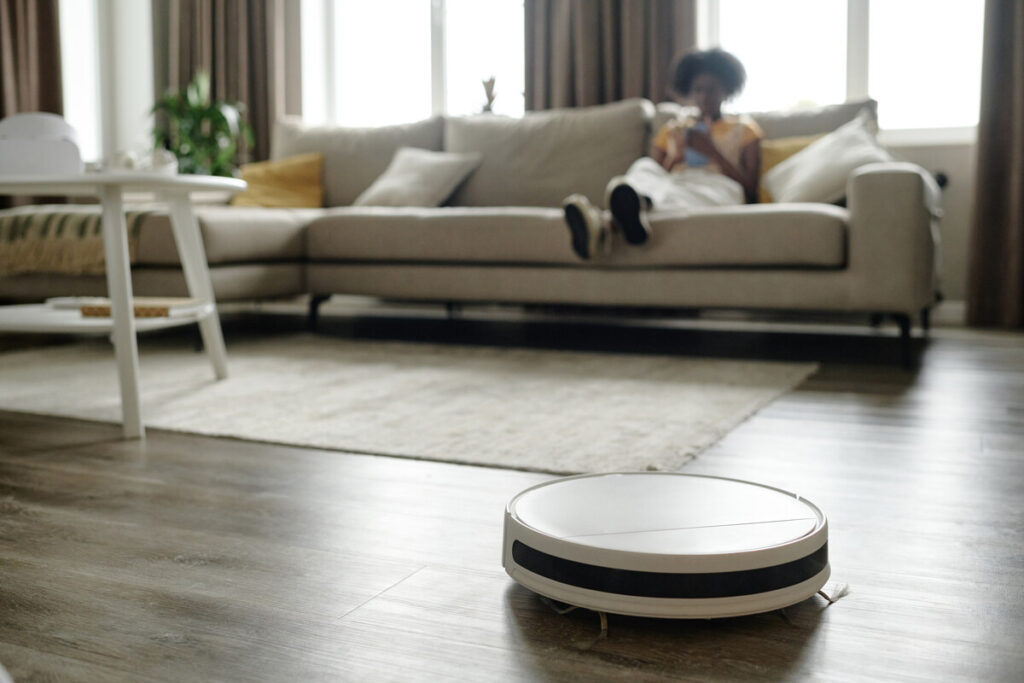
You ask a smart speaker to set a timer, and without thinking twice you call it a robot. That word sounds as English as “table” or “bread,” yet it only arrived in the 1920s, and it came from Czech.
Robot is not alone. A surprising number of the words you type every day were borrowed from other languages, and most people never notice.
A word younger than your great-grandparents
Before the 1920s, there was simply no “robot” in English. The word was created by a Czech playwright, and English picked it up almost immediately.
Think about how natural it feels today. We talk about robot vacuums, factory robots, and people who answer emails “like a robot.” A word that feels timeless is, in fact, barely a century old.
That is the funny thing about borrowed words. Once they settle in, they stop sounding foreign at all.
Borrowed words hiding in your everyday sentences
Linguists call these words loanwords. A loanword is a word taken from another language and used as is, sometimes with a small spelling change. For example, when you say “Let’s grab a coffee at the café,” the word café comes straight from French.
Here are a few more you probably use without a second thought:
- Kindergarten comes from German, where it literally means “children’s garden” (Kinder means children, Garten means garden). English kept the German spelling exactly.
- Safari comes from Swahili, which took it from Arabic.
- Ketchup probably comes from Chinese, by way of Malay.
- Tycoon comes from Japanese.
- Cookie comes from Dutch.
Put them together and you get a very ordinary sentence: “The tycoon’s kids ate cookies with ketchup at kindergarten.” Strange menu, but every key word in it was imported.
The feeling English never named on its own
Then there is déjà vu, borrowed from French, where it literally means “already seen.” The Cambridge Dictionary describes it as the strange feeling that you have already lived through what is happening right now.
Here is the interesting part. English never came up with a native word for that exact sensation. Instead of inventing one, speakers just kept the French phrase.
That is one of the two main reasons a word gets borrowed. Either a culture has no word of its own for a specific idea, or a foreign word becomes fashionable through trade, immigration, or pop culture.
Why English borrows more than most
English has always been an unusually absorbent language. After the Norman Conquest in 1066, it took in a huge wave of French vocabulary. Later came Latin and Greek, then words from hundreds of other languages through centuries of trade and colonization.
So when a word like robot slips in, it is not an exception. It is English doing what it has always done.
Two small mistakes to watch for
The first is assuming these words have always been English. It rarely causes a problem in conversation, but it can trip you up if you write about history. A character in a novel set in the 1800s talking about robots would feel off to a careful reader.
The second is spelling. Déjà vu keeps its accents in the dictionary, and people often drop them or mangle the phrase. If you are writing something formal, the accented version is the safe choice. In a quick text, nobody will mind.
The quick check to remember
When a word looks slightly unusual, with an accent, a double vowel, or a spelling that breaks English patterns, it is often a loanword. Before you use it in a formal document, take five seconds to look it up. Borrowed words often keep their original spelling, so the dictionary version is the one to copy.
And the next time you call something a robot, remember you are speaking a little bit of Czech.