

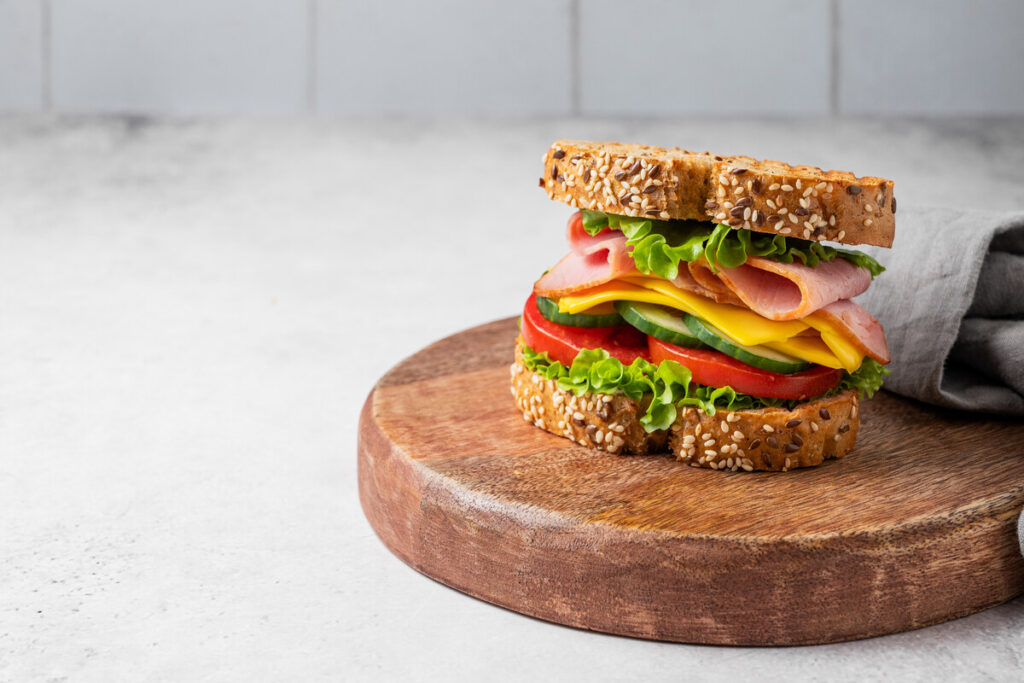
The next time you order a sandwich, you are technically saying the name of an 18th-century English earl who just wanted to keep gambling with clean hands.
Words like this are called eponyms: everyday terms that started out as somebody’s actual name. No capital letter, no footnote, nothing left to remind you a real person is hiding inside the word. Once a name slips into casual use often enough, it quietly stops being a name and becomes just another word in the dictionary. Here are three of the strangest cases, and what they mean for how you should be writing them today.
The earl who invented a snack by accident
John Montagu, the 4th Earl of Sandwich, was a British aristocrat in the 1700s with a habit of asking for his meat served between two slices of bread. Historians disagree on why exactly: some say it let him keep playing cards without greasy fingers, others point to long hours at his desk instead. Either way, the habit got his name attached to it.
That name never left. Cambridge Dictionary defines a sandwich today simply as two slices of bread with a filling in between, with zero reference to the earl who made it famous.
The captain nobody would speak to
Captain Charles Boycott managed a farming estate in Ireland in the 1880s. When he clashed with his tenants over rent, they responded with a coordinated freeze-out: no one would sell to him, work for him, deliver his mail, or even speak to him.
The tactic worked so well it needed a name of its own, and Boycott’s was right there. Today, to boycott something means to refuse to buy a product or take part in an activity as a form of protest, which is exactly the strategy that was once used against one very unpopular man. Notice the pattern: the word did not describe Boycott himself, it described what an entire community decided to do to him.
The finance minister who got mocked into a word
Étienne de Silhouette was France’s controller-general of finances in the 1700s, best known for pushing extreme budget cuts. People mocked anything cheap or hastily made as being done “à la Silhouette,” a jab at his name.
Cut-paper shadow portraits were exactly that: a much cheaper alternative to a full painted portrait, since anyone could trace an outline instead of paying an artist to sit and paint. The mocking nickname stuck to them, the mockery faded, and the word silhouette is all that survived, now describing any dark outline seen against a bright background.
The one rule to remember
All three of these words describe real people, yet none of them get a capital letter anymore. That is actually the giveaway that a word has fully entered everyday English: once a name stops needing a capital, it has stopped being a name at all, even if you can still trace it back to a real person if you look closely enough.
So the next rule of thumb for your own writing: if you are ever tempted to capitalize sandwich, boycott, or silhouette because you remember they came from real names, resist it. Etymology does not override modern spelling. When in doubt, lowercase wins.